ISLAMABAD — Pakistan and Japan have reaffirmed their commitment to deepening development cooperation across multiple economic sectors, aligning future initiatives with Pakistan’s URAAN Pakistan 5Es Framework.
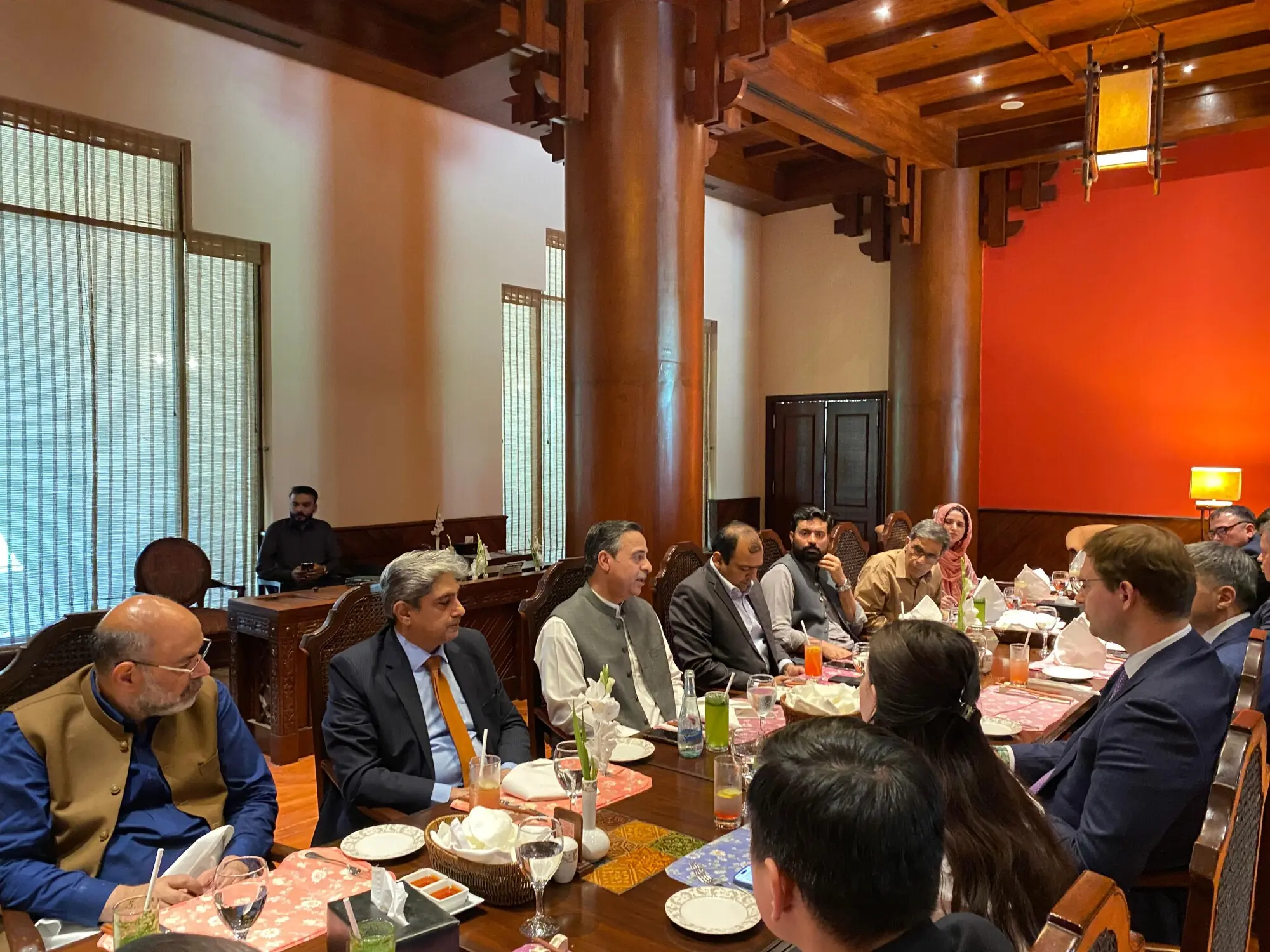
The understanding was reached during a high-level meeting at the Ministry of Planning between Federal Minister for Planning, Development & Special Initiatives Prof. Ahsan Iqbal and Japan International Cooperation Agency (JICA) President Dr. Tanaka Akihiko.
Key Highlights of the Bilateral Dialogue
1. Macroeconomic Stability & Public Finances
Federal Minister Prof. Ahsan Iqbal briefed the Japanese delegation on Pakistan’s improving economic landscape. He highlighted:
- Restored stability achieved through structural reforms and fiscal discipline.
- Doubling of government revenues over the past three years.
- Transition toward an export-led growth model supported by modern infrastructure and regional connectivity.
2. Alignment with URAAN Pakistan & 5Es Framework
The Minister introduced the URAAN Pakistan roadmap, structured around the 5Es Framework:
- Exports (Cornerstone of growth)
- E-Pakistan (Digital transformation)
- Environment & Climate Change
- Energy & Infrastructure
- Equity & Empowerment
3. Proposed Collaborative Initiatives
To expand cultural, industrial, and social bilateral cooperation, Pakistan proposed several key initiatives:
- Pakistan–Japan Gandhara Tourism Corridor: A joint venture aimed at boosting cultural exchange and religious tourism.
- Productivity, Quality, and Innovation (PQI): Seeking JICA’s technical cooperation alongside the Japan Productivity Center (JPC) to enhance industrial competitiveness.
- Joint Working Group: Establishing a collaborative team to design and track high-impact development projects.
JICA’s Response & Future Outlook
JICA President Dr. Tanaka Akihiko lauded Pakistan’s economic stabilization efforts and expressed Japan’s desire to revive bilateral development momentum.
| Cooperation Focus Area | Key Objectives |
| Human Resource & Youth | Skill development, vocational training, and youth/women empowerment. |
| Infrastructure & Connectivity | Strengthening SEZs, digital infrastructure, and logistics. |
| Disaster Risk Management | Capacity building and climate-resilient engineering. |
| SMEs & Productivity | Adoption of PQI benchmarks to boost export efficiency. |
Both sides agreed to set up a dedicated coordination mechanism, incorporating technical workshops and regular consultations with JICA headquarters in Tokyo to accelerate project implementation.