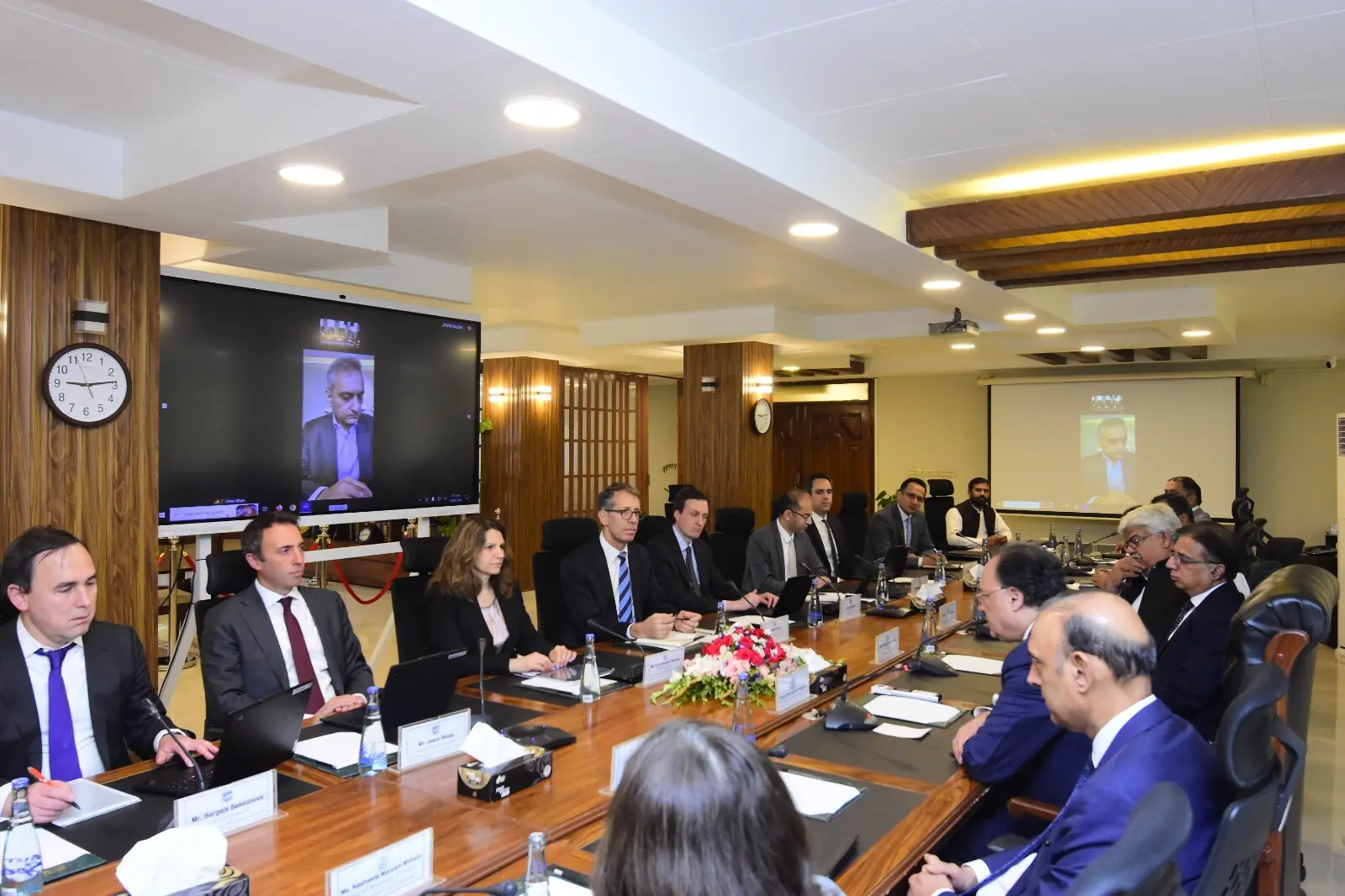
ISLAMABAD — In a major push to accelerate gender mainstreaming and youth empowerment, Chairman of the Prime Minister’s Youth Programme (PMYP), Rana Mashhood Ahmad Khan, hosted a high-level UN Women Pakistan delegation led by Country Representative Jamshed Kazi at the Prime Minister’s Office.
The meeting established a collaborative framework to integrate gender-responsive strategies across the government’s flagship youth development initiatives, focusing heavily on enhancing female labor force participation, entrepreneurship, and leadership.
Scaling Women’s Quotas in National Frameworks
Chairman Rana Mashhood Ahmad Khan outlined the government’s operational roadmap under the 4Es Initiative (Education, Employment, Engagement, and Environment), identifying crucial structural interventions designed specifically to bring young women into the formal economic fold:
- Prime Minister’s Business & Agriculture Loan Scheme: A dedicated 25% quota has been institutionalized for women across all lending categories to lower barriers to capital.
- National Youth Employment Plan (NYEP): The framework targets a significant structural increase, aiming to push female labor force participation to 35% by 2030.
- Financial Access Hub: PMYP is establishing a centralized Business Loan Scheme Facilitation Centre, uniting 25 participating commercial banks and microfinance institutions under a “one-window” platform to streamline credit access for female entrepreneurs.
Digital Inclusion and the Women Leaders Mentorship Program
The discussions also highlighted the massive footprint of the Digital Youth Hub (DYH)—Pakistan’s premier digital ecosystem for youth engagement—which has already registered over 800,000 users and 3,000 companies. The platform will serve as a primary vehicle for UN Women and PMYP to scale technical skills development and market exposure.
Additionally, Country Representative Jamshed Kazi briefed the PMYP leadership on UN Women’s upcoming Women Leaders Mentorship Programme, designed to nurture young women seeking political participation and public leadership roles.
“While many young women across Pakistan possess immense natural potential, they frequently confront systemic gaps in mentorship, technical training, and institutional support,” noted Jamshed Kazi. “UN Women is fully committed to bridging these structural disparities in tandem with the PMYP.”
Both entities concluded the session by agreeing to formalize specialized working groups to supervise capacity-building programs, ensuring that grassroots outreach effectively connects young women across all provinces with these newly optimized socio-economic opportunities.