ISLAMABAD:
Debt is not inherently harmful if it is used productively – borrowed to invest in future yield-generating projects such as infrastructure and high-tech education. Nations like Japan, the US, China, Singapore and India have used debt efficiently to strengthen their economies and boost future income. However, debt borrowed for deficit financing or consumption becomes a burden.
Sri Lanka, Argentina and Pakistan are struggling with debt accumulated due to persistent deficits and non-development spending. Excessive non-productive borrowing crowds out investment, raises interest costs and increases default risks, ultimately harming long-term growth, as seen in recent crises in Sri Lanka and Pakistan.
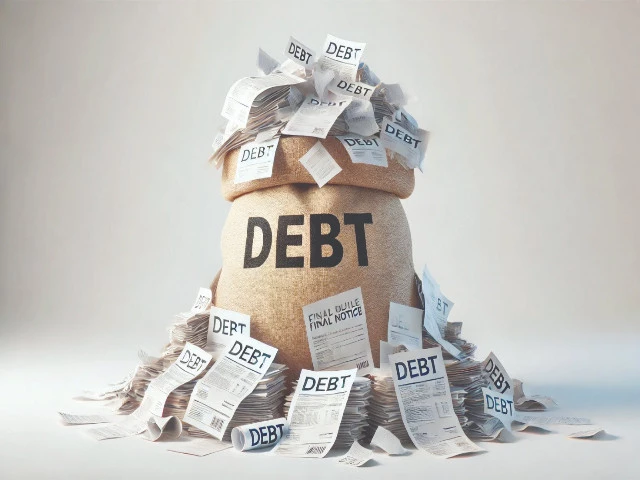
Pakistan’s external debt and liabilities have reached $138.01 billion in the second quarter of fiscal year 2026 (Q2FY26), reflecting a year-on-year increase of $7.238 billion, or 5.54%, compared to $130.773 billion at the end of Q2FY25. At the same time, debt servicing payments surged to $4.07 billion in Q2FY26, up from $3.55 billion in the preceding quarter. These figures are not merely statistical entries in official reports; they represent mounting pressure on an already fragile economy and a growing burden on the people of Pakistan.
External debt accumulation is not new to Pakistan. For decades, successive governments have relied on foreign borrowing to finance external payments, bridge fiscal deficits, fund development projects and stabilise foreign exchange reserves. However, in recent years, the pace and sustainability of this borrowing have become serious concerns. The increase to $138.01 billion indicates that reliance on external financing remains substantial. While some borrowing may be justified for economic development, the real issue lies in the effective utilisation of funds and the ability to generate sufficient foreign exchange to service these liabilities.
Rising debt servicing is particularly alarming, reaching $4.07 billion in Q2FY26 compared to $3.55 billion in the preceding quarter. These payments are made in US dollars, placing pressure on foreign exchange reserves and the exchange rate. When reserves are low, the central bank is compelled to allow currency depreciation. Although the State Bank of Pakistan is currently managing the rupee tightly against the dollar, an artificially stable currency hurts exports, widens the trade deficit and increases the likelihood of returning to another IIMF programme – perpetuating a vicious cycle of debt.
The business community is directly affected by rising external debt and servicing obligations. As repayments increase, the government often responds by tightening fiscal policies, raising taxes or cutting development spending. These measures translate into higher costs for businesses and reduced economic activity. High debt servicing crowds out productive investment, and Pakistan is already facing one of the lowest investment-to-GDP ratios in the region. Instead of allocating resources to industrial expansion, export incentives, infrastructure or energy reforms, a large share of the budget is diverted toward servicing past loans. This weakens growth prospects and erodes investor confidence.
Heavy reliance on external financing also brings stringent conditions from lenders, as seen in the ongoing IMF programme. These conditions often include subsidy cuts, higher energy tariffs, increased taxation and exchange rate adjustments. While some reforms are necessary, abrupt policy shifts disrupt business planning and reduce competitiveness in domestic and international markets, worsening the trade deficit and intensifying challenges faced by exporters.
The burden of rising debt is not confined to government accounts; it is ultimately borne by the public. Increased taxation, inflation and currency depreciation erode purchasing power. When debt servicing consumes a large share of national revenue, fewer resources remain available for health, education and social protection. Access to basic necessities, such as safe drinking water, remains limited across many parts of the country, reflecting the broader impact of fiscal constraints.
Currency depreciation, often triggered by external imbalances, raises import costs, particularly for essential goods. Given Pakistan’s dependence on imported fuel, machinery and commodities, depreciation fuels inflation. The result is a higher cost of living for ordinary citizens, exacerbating economic hardship and pushing more households into poverty.
The root causes of Pakistan’s external debt problem lie in structural weaknesses. The export base remains narrow, dependent on a limited range of products and markets, primarily textiles and rice. Despite potential in information technology, agriculture value addition, engineering goods and minerals, diversification efforts have been insufficient. Similarly, tax collection remains below potential due to a narrow base and inefficiencies in documentation. Despite tax revenues growing over the past decade, government expenditures continue to exceed revenues, leading to a sharp rise in public debt. Without meaningful tax reforms and expenditure rationalisation, borrowing becomes the default option.