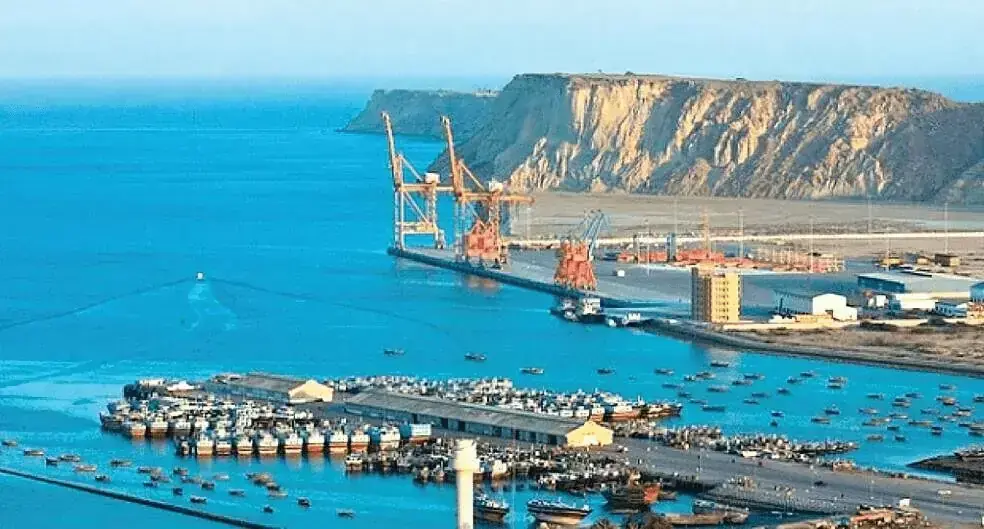
In line with the directions from the Federal Minister of Maritime Affairs Junaid Anwar Chaudhry, the Gwadar Port Authority has revised its port tariff structure to attract greater transit and international transshipment container traffic through Gwadar port.
According to a statement released on Monday, the decision to significantly reduce tariffs is expected to increase global transit traffic.
The authority has reduced berthing fees for container vessels and ships carrying transit or transshipment cargo by 25%, said Chaudhry.
Port charges on international transshipment container cargo have been lowered by 40%, he added. Port charges on transit container cargo have been reduced by 31%.
Moreover, the authority is offering a one-month free storage facility for general cargo. An unprecedented incentive compared to other national ports, which typically offer only five days.
The implementation of the policy to make Gwadar a regional logistics hub has begun, said Chaudhry.
‘Integrated transport system key to Gwadar Port’s global status’
“These incentives take effect immediately, and further adjustments will be reviewed in phases based on operational data and market response,” the minister added, noting that future revisions would be guided by cargo trends, regional competition, and sustainability considerations.
Chaudhry said the measures form part of a broader strategy to transform Gwadar into a competitive, investor-friendly, and modern deep-sea port serving as a strategic gateway for trade with Central Asia, the Middle East, East Africa and beyond.
He said that amid rising demand for low-cost and congestion-free shipping routes, Gwadar is well placed to capture a larger share of regional trade flows. The revised tariff regime, he added, is expected to reduce operational costs for shipping lines, encourage new transshipment and feeder services, and increase cargo throughput.
“This initiative will stimulate economic activity in the country, generate employment opportunities, and expand Pakistan’s logistics and maritime sectors,” Junaid Chaudhry said.
Transhipment activity has increased significantly in Pakistan in recent periods, particularly at Karachi Port, Port Qasim, and, to some extent, at Gwadar Port, amid rising tensions in the Middle East, which have prompted some shipping lines to divert cargo to alternative routes, including Pakistan.
Meanwhile, Chairman of Gwadar Port, Noorul Haq Baloch, has said that significant growth in employment opportunities is expected in Balochistan as the newly introduced tariff structure is set to boost commercial activity.
In a statement, the Chairman of Gwadar Port noted that reduced fees and improved facilities will attract both local and international investors, accelerating economic development in the region and creating new job opportunities.